


Most IoT platforms price on one of a small set of units: the device, the site, the message, or the feature tier. The unit decides what your bill does when the project grows, so it matters more than the starting number. This explainer walks through each pricing model, what it rewards and what it punishes, and the questions to ask before you sign. It is written for facility and operations teams buying monitoring software for wireless sensors, not for teams buying cloud infrastructure by the API call.
Why the pricing unit matters more than the price
A sensor project rarely stays the size it starts. A pilot of a few freezers becomes every cooler in the building, then a second building, then a customer who wants their own login. Each pricing model reacts to that growth differently. Pick the model that matches how your deployment will grow, then compare prices inside it.
Model 1: per device
You pay a monthly or annual amount for each connected sensor, usually in bands (up to a set number of devices per plan). This is the most common model for sensor monitoring platforms because the device is the thing you can count and the thing that creates work for the platform.
- Rewards: predictable budgets. If you know how many sensors you will deploy, you know the bill.
- Punishes: paying for hardware that is not doing anything. Spares on a shelf, sensors waiting for installation and units pulled for repair can all count against your plan on some platforms.
- Ask: which devices count? Only devices that are assigned and reporting, or every device registered to the account?
Model 2: per site or per location
You pay per building, store or facility, with some allowance of devices inside each. It suits chains with a standard kit at every location, such as a convenience store group with the same cooler and freezer set in every store.
- Rewards: dense sites with many sensors under one roof.
- Punishes: spread-out deployments, such as remote pump stations or tanks with one or two sensors each, where every location is billed as a full site.
- Ask: how is a site defined, and what happens when a site goes over its device allowance?
Model 3: per message or per data point
Common in general-purpose cloud IoT services: you pay for the messages your devices send, sometimes plus storage and rules processing. It can look cheap for a pilot.
- Rewards: devices that report rarely.
- Punishes: anything you tune for faster reporting. Shortening a sensor's reporting interval to catch a cooler excursion sooner multiplies the bill. Budgeting becomes a forecast of device behavior, which facility teams rarely want to own.
- Ask: what does one message cost when you include storage, alerts and dashboards, and what happens to the bill if you halve the reporting interval?
Model 4: feature tiers
Most platforms combine one of the units above with tiers: a lower plan with core monitoring, higher plans that unlock things like multiple sites, advanced workflows, analytics or integrations. Tiers are where comparisons go wrong, because the feature you need may sit one plan higher than the price you compared.
- Ask: which tier includes the features you actually need on day one: alerting by text message, multi-site structure, reports, an API, customer logins if you resell?
- Ask: are the plan limits on devices, dashboards and users published, or do you find them by hitting them?
The costs outside the subscription
The subscription is rarely the whole cost of remote monitoring. Put these on the same sheet before you compare:
- Connectivity. LoRaWAN sensors need a gateway and a network server; cellular sensors carry data plans. Ask who supplies each and whether it is billed separately.
- Text message alerts. Many platforms charge for SMS separately from email and in-app alerts. Ask how it is metered and what happens when the balance runs out.
- Hardware lock-in. If the platform only works with its own sensors, the sensor price is part of the platform price. If it accepts third-party devices, ask which plan allows it.
- Data retention. How long raw readings and summaries are kept on each plan matters for audits and trend analysis.
- Exit terms. What happens to your data if you cancel, and for how long can you come back?
How ioX-Pulse prices
ioX-Pulse uses per-device plans with published prices on the ioX-Pulse pricing page, monthly or annual. A few mechanics are worth knowing because they answer the questions above:
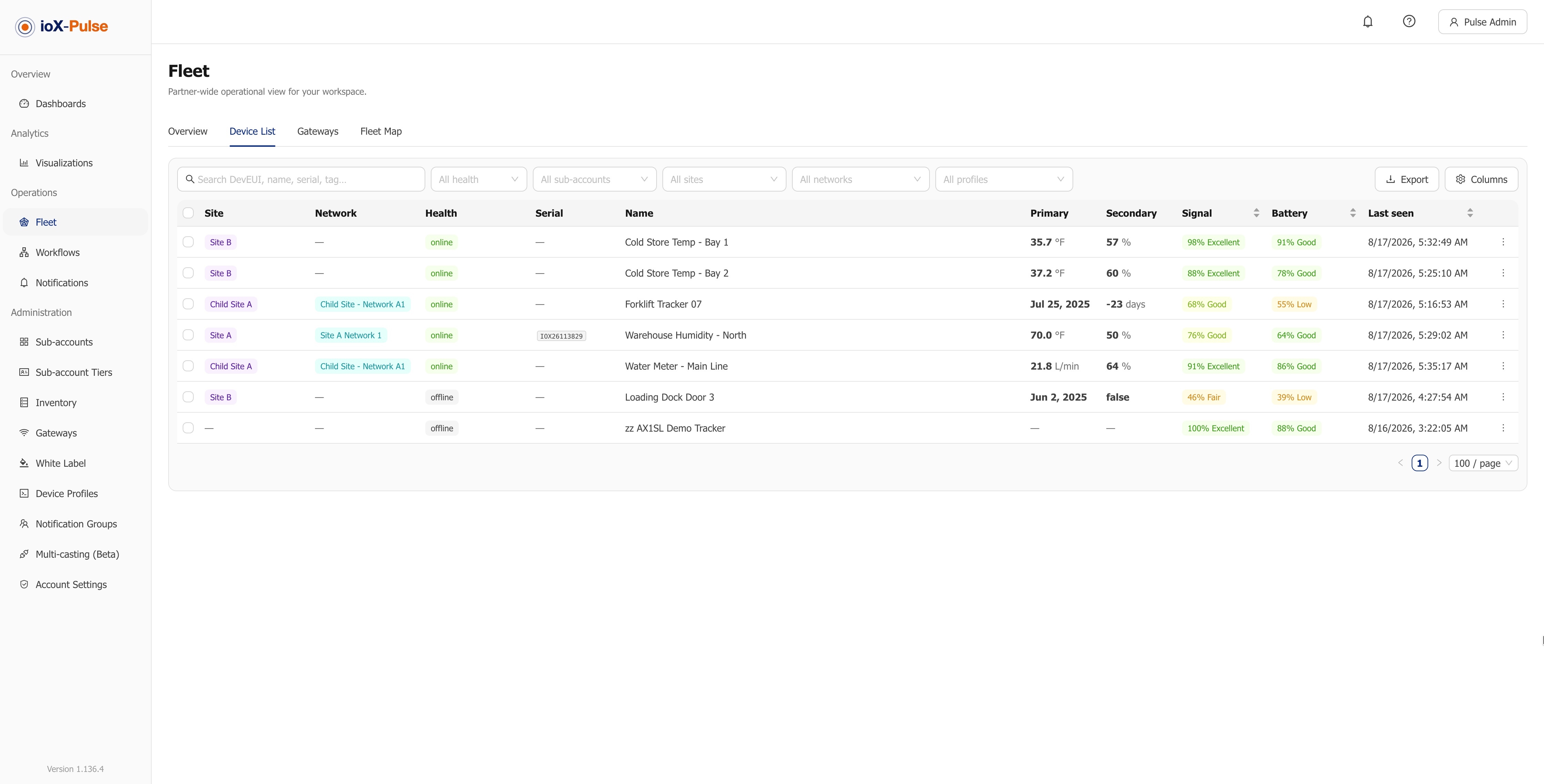
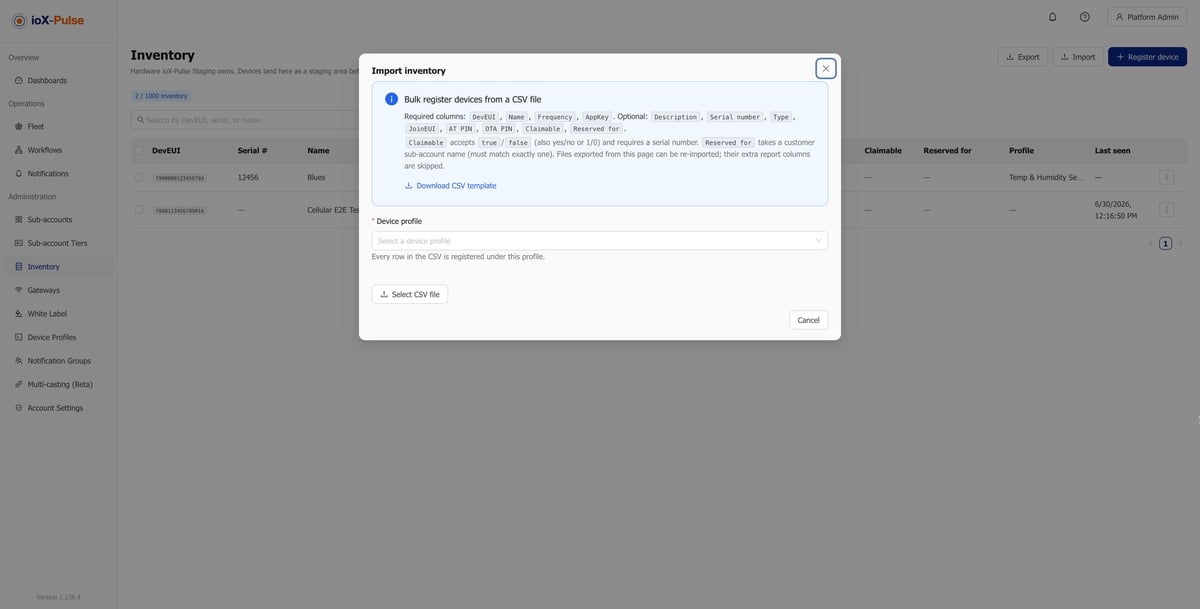
- You pay for devices that are live. Devices held in Inventory or Archive do not use a seat; only devices assigned to a workspace do. Spares and units waiting for installation cost nothing until you deploy them. One caution: moving a deployed device back to Inventory permanently deletes its readings, so do it only when you no longer need that history.
- Extra device seats can be added at any time on an active paid plan and are available right away.
- Upgrades are immediate and prorated; downgrades take effect at renewal, and only when you are within the smaller plan's device limit.
- Free trials on selected plans collect a card up front and charge it only when the trial ends, unless you cancel first.
- Text message alerts use prepaid credits with a live estimate in the workflow builder and a warning when the balance runs low, so a text never fails silently. Email and in-app alerts continue either way. See how IoT sensor alerts work.
- Canceling keeps access to the end of the paid period, then suspends the account with data kept for a win-back period of about 60 days.
- Payments run through Stripe; ioX never sees or stores your card details.
Plan features, including multi-site structure, advanced workflows and external sensor integration, are listed plan by plan on the pricing page. How devices are registered, assigned and moved between Inventory and a workspace is covered on IoT device management.
A five-minute way to compare quotes
- Write down the device count for the pilot, year one and year three.
- Note how many of those devices will be spares or waiting for installation at any time.
- For each quote, price all three points, including connectivity, text messages and the tier that holds the features you need on day one.
- Halve the reporting interval in your head and see which quotes change.
- Ask each vendor what happens to your data if you leave.
Pro tip: if you resell monitoring to your own customers, add a fourth point: what it costs to give each customer their own login and branding. Multi-tenant structure is covered in multi-tenant IoT platform.
Where this fits
Pricing is one part of choosing remote IoT monitoring software for wireless sensors. The buyer's guide covers the rest of the questions to ask before you commit.
Frequently asked questions
How are IoT platforms usually priced?
Most price per connected device, per site, per message or data point, or by feature tier, and many combine a unit with tiers. Sensor monitoring platforms for facilities most often price per device in bands, while general cloud IoT services more often meter messages and storage.
Is per-device or per-message pricing cheaper?
It depends on how often your devices report and how the project grows. Per-message pricing can look cheaper for a small pilot with slow reporting, but the bill rises whenever you shorten the reporting interval. Per-device pricing keeps the bill tied to the number of sensors, which is easier to budget.
Do spare or uninstalled sensors count toward an ioX-Pulse plan?
No. Devices held in Inventory or Archive do not use a seat. Only devices assigned to a workspace count against your plan's device limit.
Are text message alerts included in the subscription?
In ioX-Pulse, text messages use prepaid credits, with a live estimate per message in the workflow builder and a low-balance warning. Email and in-app notifications are not metered this way.
What happens to my data if I cancel?
In ioX-Pulse, access continues to the end of the period you paid for. The account is then suspended and your data is kept for a win-back period of about 60 days, so resubscribing in that window restores everything.
Want to see the plans side by side? See ioX-Pulse plans or talk to an IoT specialist.