ioX-Pulse - LoRaWAN IoT Platform
The IoT Platform Behind Connected Operations
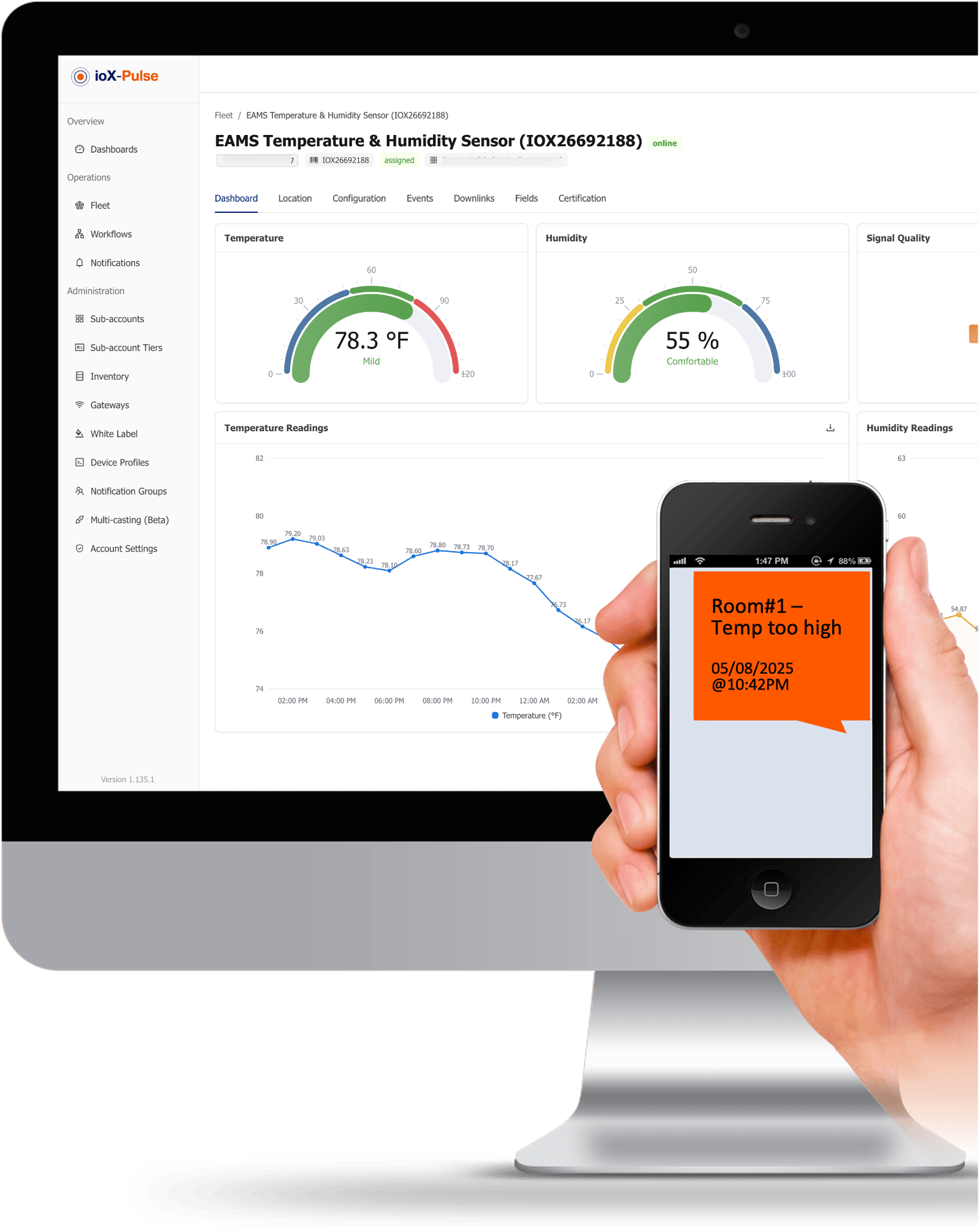
ioX-Pulse is an IoT device management platform for LoRaWAN networks. It takes the raw bytes a sensor transmits, decodes them into named readings, and presents them as live dashboards, alerts, and reports. It works with any standards-compliant LoRaWAN gateway and with sensors from any manufacturer. Service providers run ioX-Pulse as a multi-tenant workspace, giving each customer, site, or project its own sub-account under their own brand and domain. ioX-Pulse is part of the ioX-Connect suite and runs independently of it.
Key specification:
- Networks: LoRaWAN across EU868, US915, AS923, AU915 and IN865, plus cellular NB-IoT, LTE-M, and Blues Notehub devices
- Gateways: any standards-compliant LoRaWAN gateway, connected over the Semtech UDP packet forwarder
- Tenancy: one partner workspace, a separate sub-account per customer, site, or project, each with its own devices, users, and feature tier
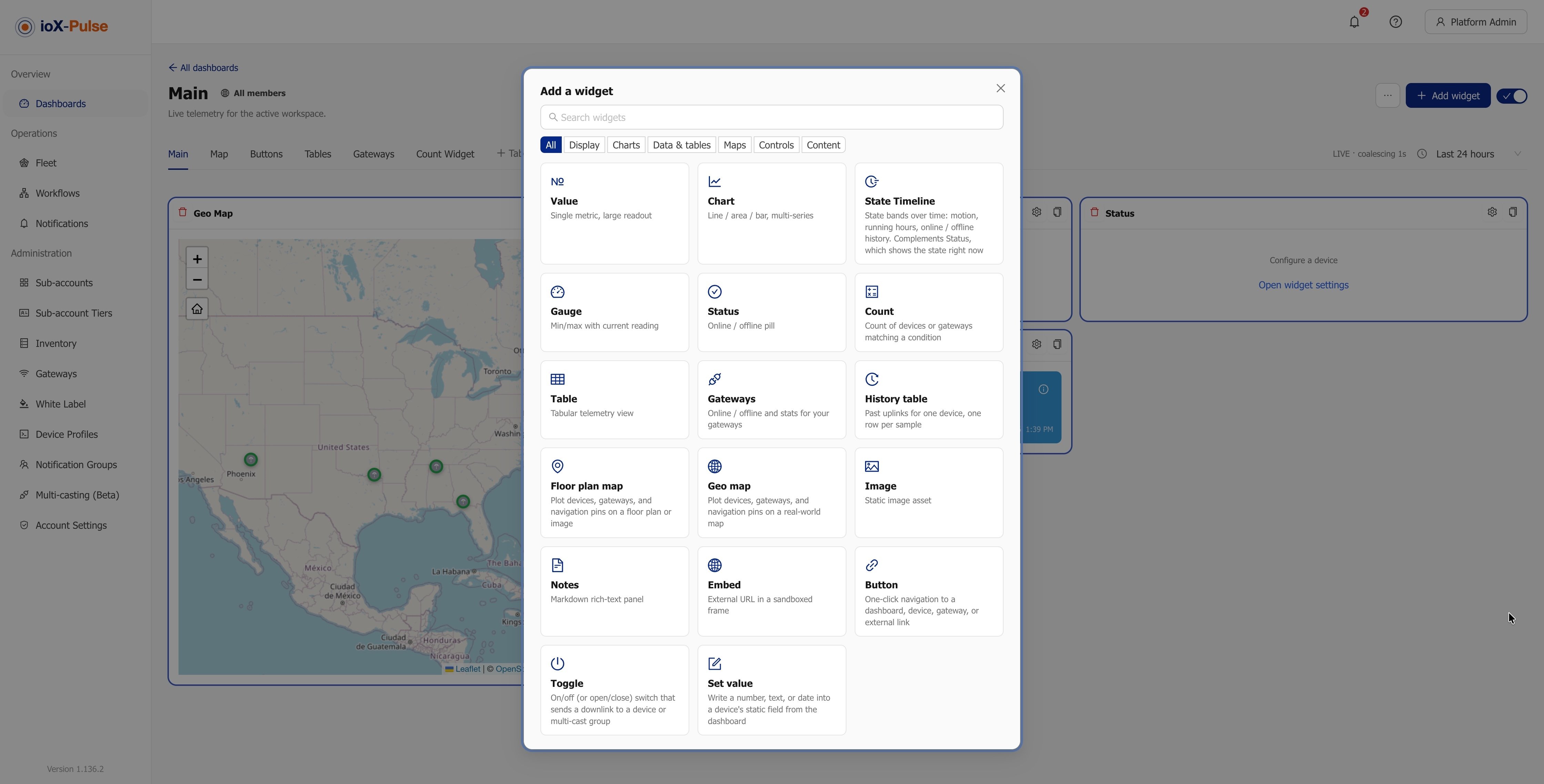
- Dashboards: 11 widget types on a 12-column grid, across 5 dashboard scopes, updating live as uplinks arrive
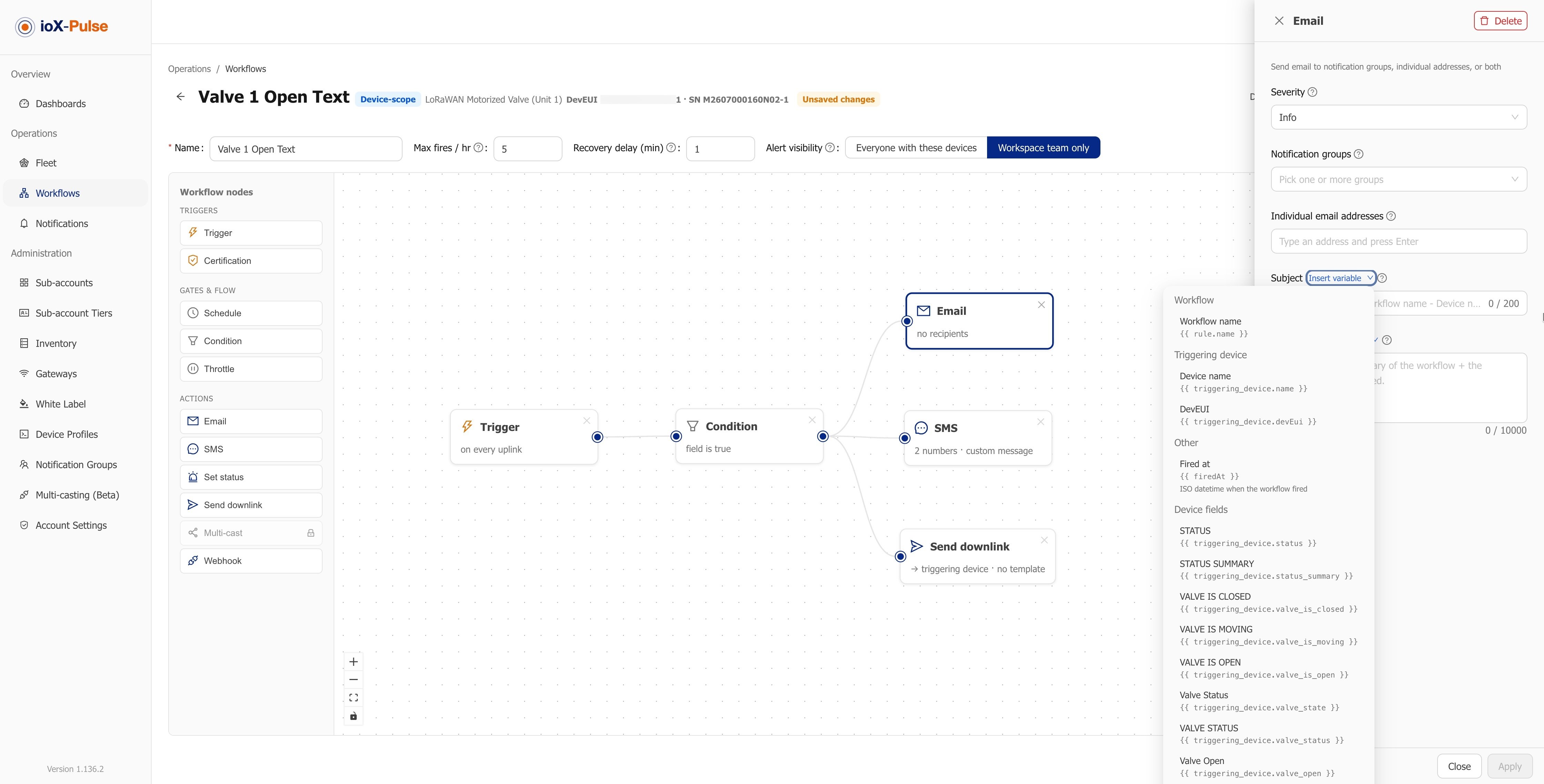
- Alerting: email, SMS, device alert state, downlink, multicast, and outbound webhook actions
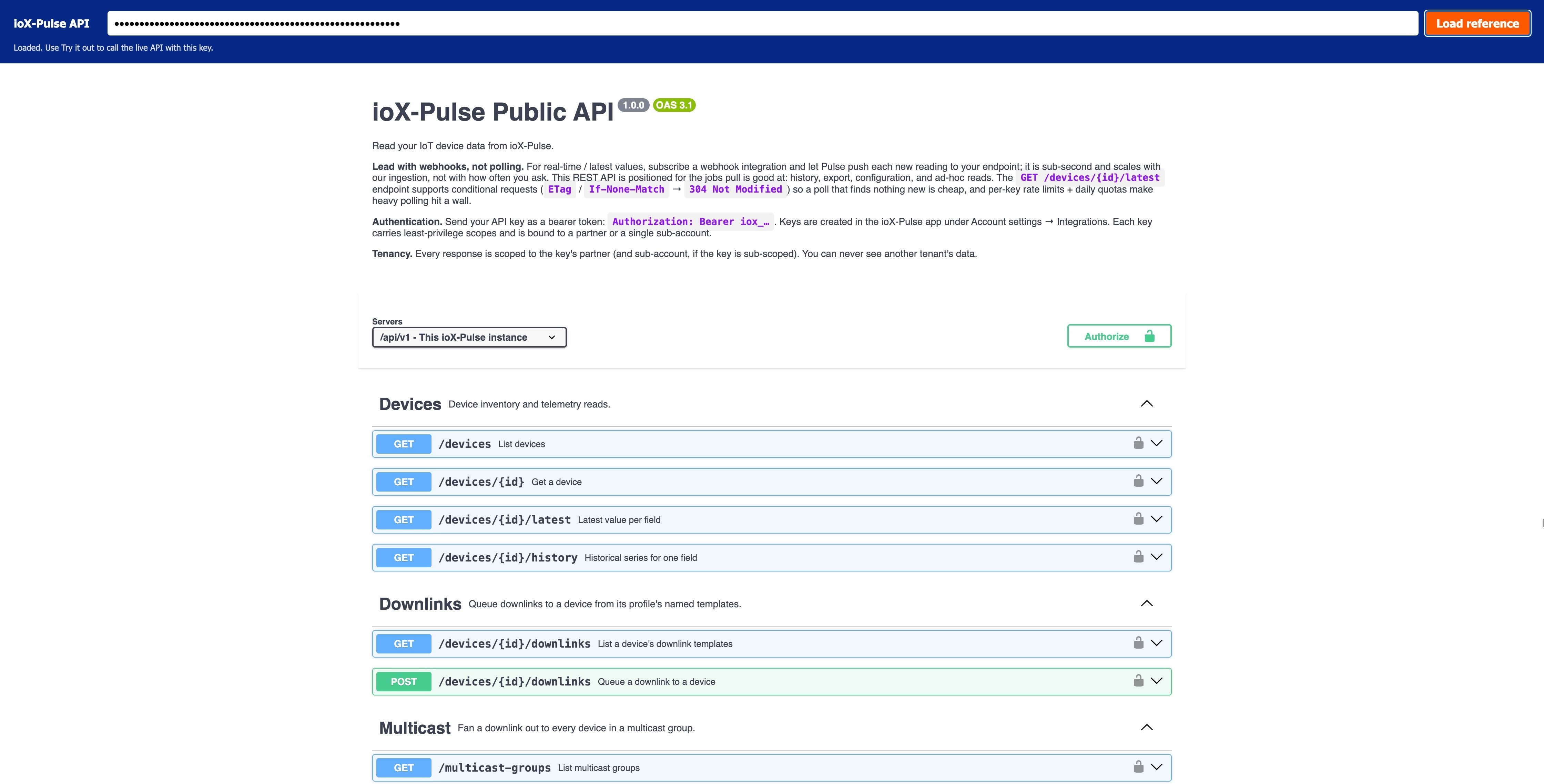
- Integration: versioned REST API under /api/v1 with a live OpenAPI reference, plus 5 signed webhook events
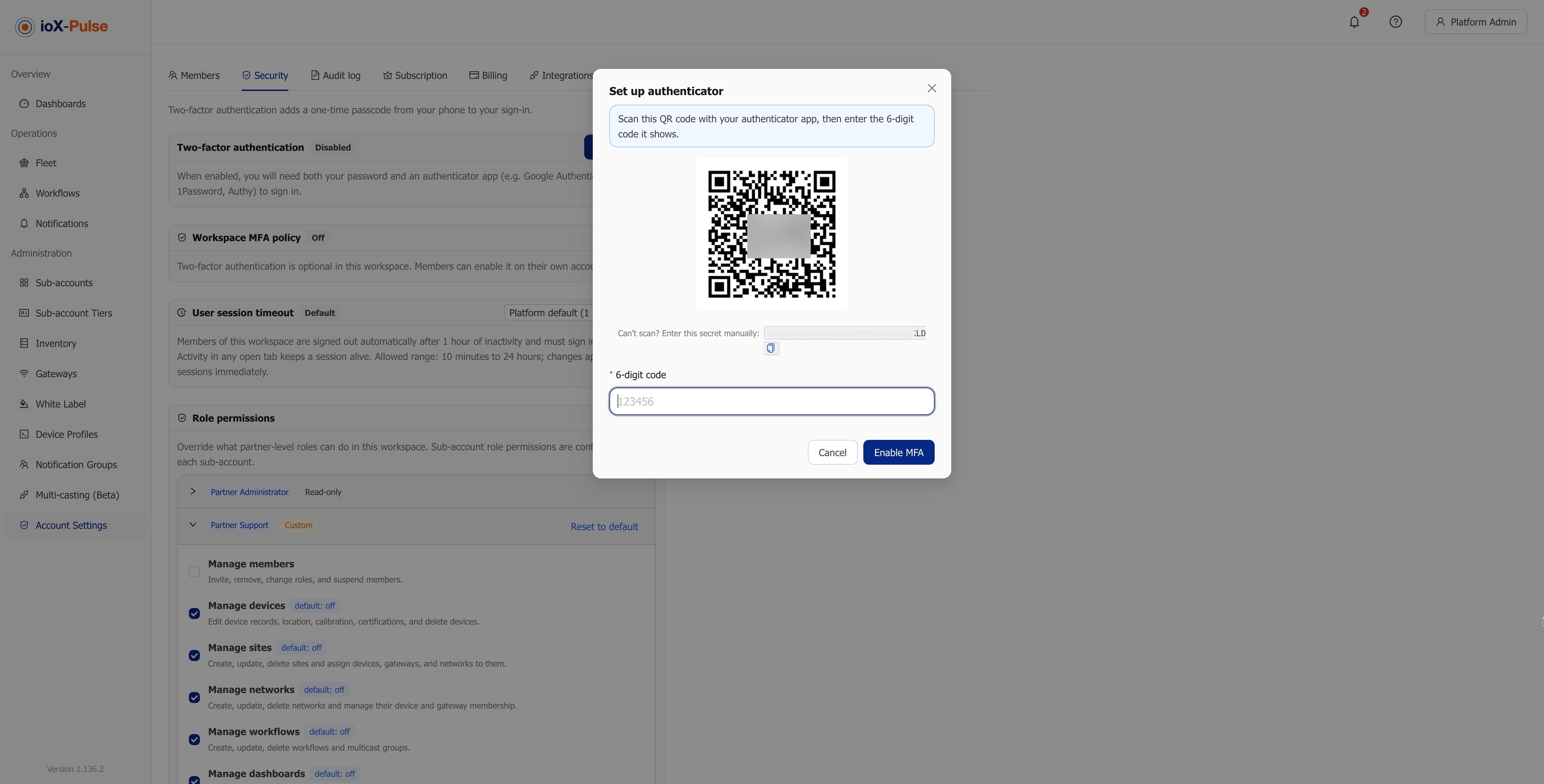
- Access control: 5 roles with per-role visibility and permission overrides, and TOTP multi-factor authentication
- Branding: your logo, colors, app icon, and your own domain, applied across every sub-account
COLLECT | ANALYZE | ACT
How ioX-Pulse Turns Sensor Data Into Action
Every part of ioX-Pulse serves one of three jobs: getting data in reliably, making it legible, and doing something about it. The capabilities below are grouped that way.
COLLECT
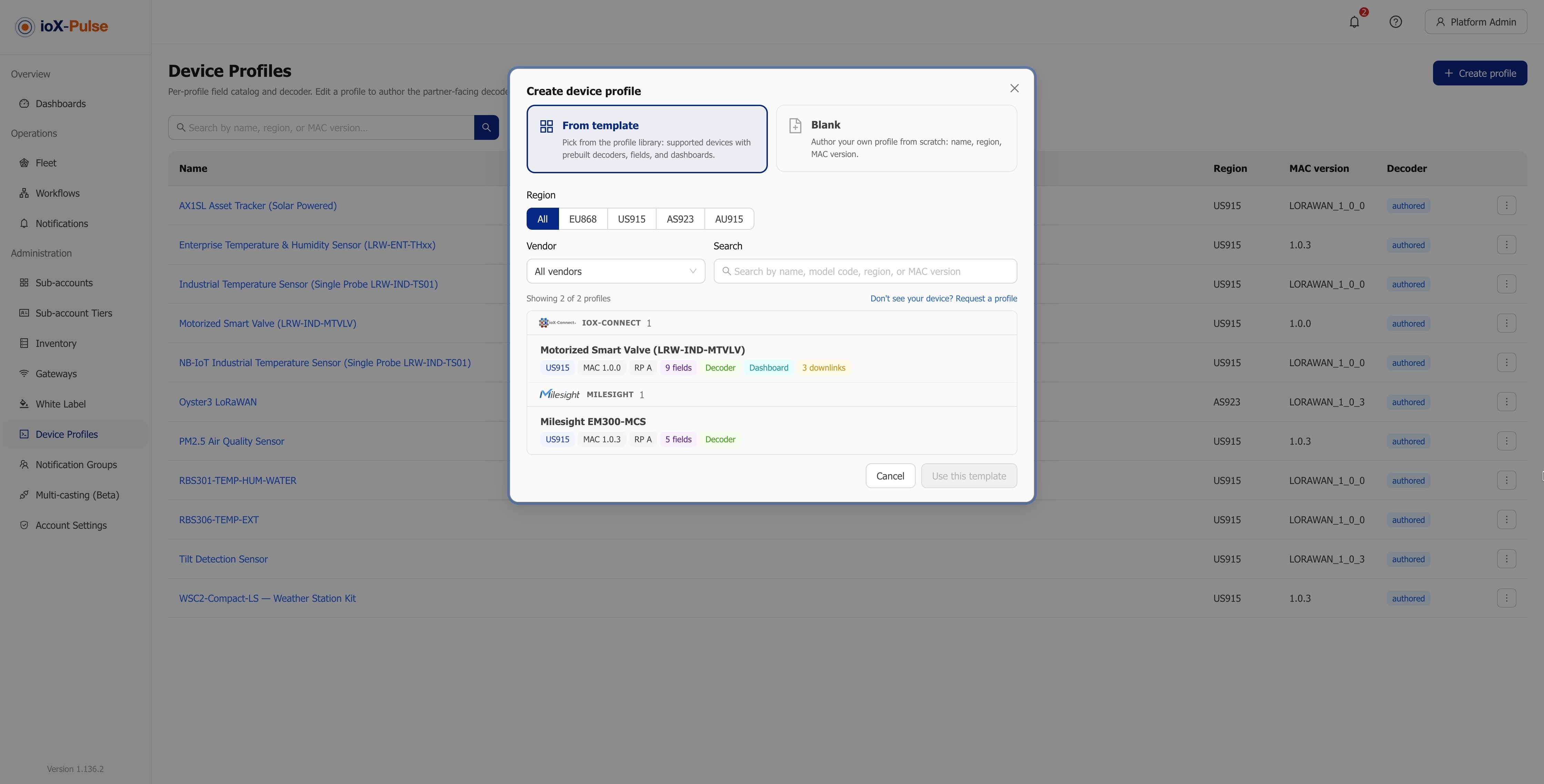
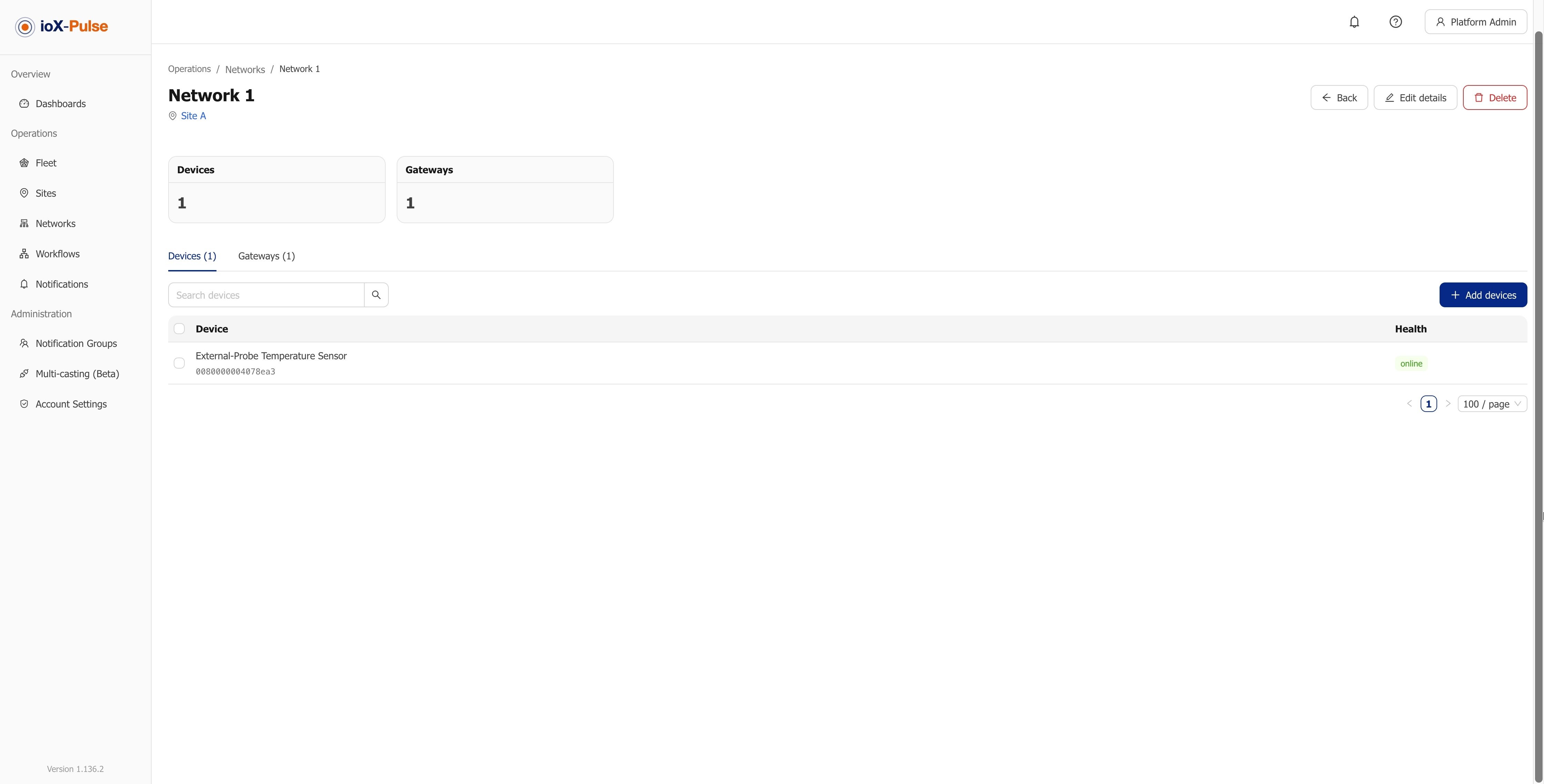
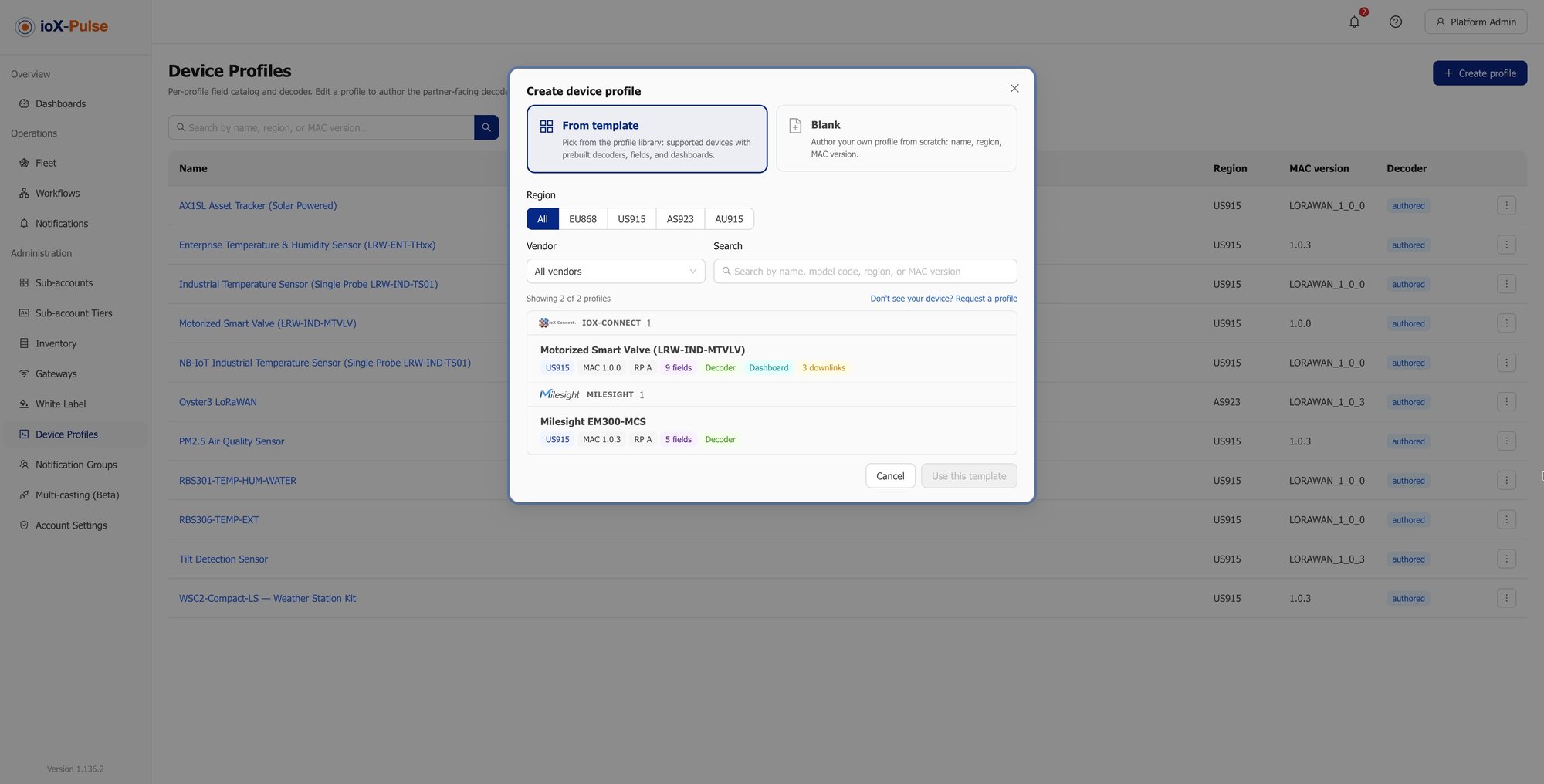
Devices arrive in inventory, get assigned to a customer, and start reporting. Device profiles turn each manufacturer's payload format into named fields. Gateways forward the traffic, and RSSI, SNR, and a plain-language Signal Quality reading come free on every device with no decoder setup at all.
ANALYZE
Dashboards put the readings in context: gauges for ranges, charts for trends, state timelines for things that switch. Sites and networks group equipment the way your operation is actually organized. Per-device calibration corrects the drift that real sensors develop in the field.
ACT
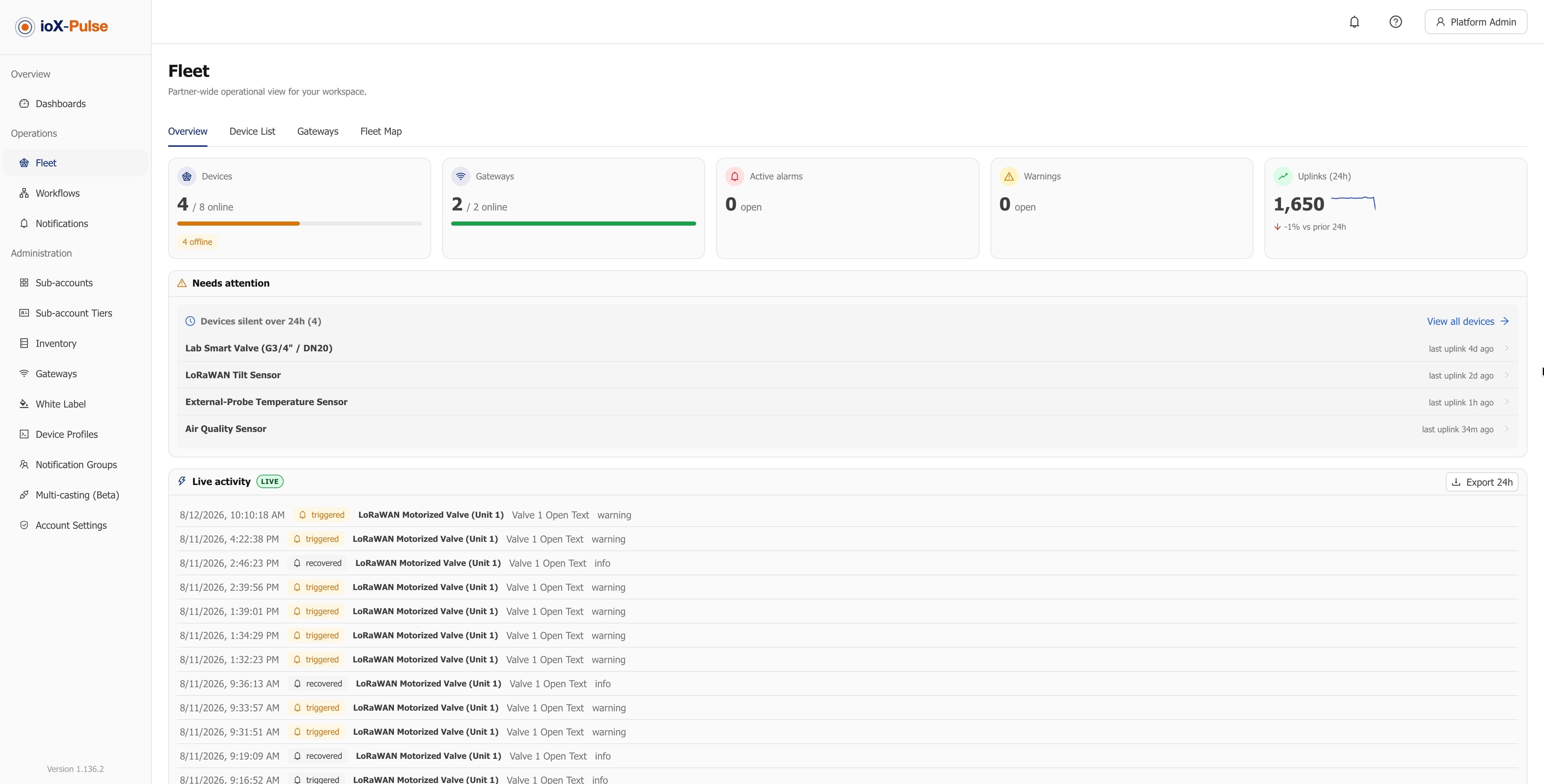
Workflows watch for the conditions that matter and email, text, set a device's alert state, send a downlink, or post to your own systems. The API and webhooks push the same data into whatever you already run.
Trusted by customers across multiple industries

Everything ioX-Pulse Does
Ten capabilities, each with its own page. Start wherever your question is.
Open-standard LoRaWAN, any manufacturer
Works With the Hardware You Already Have
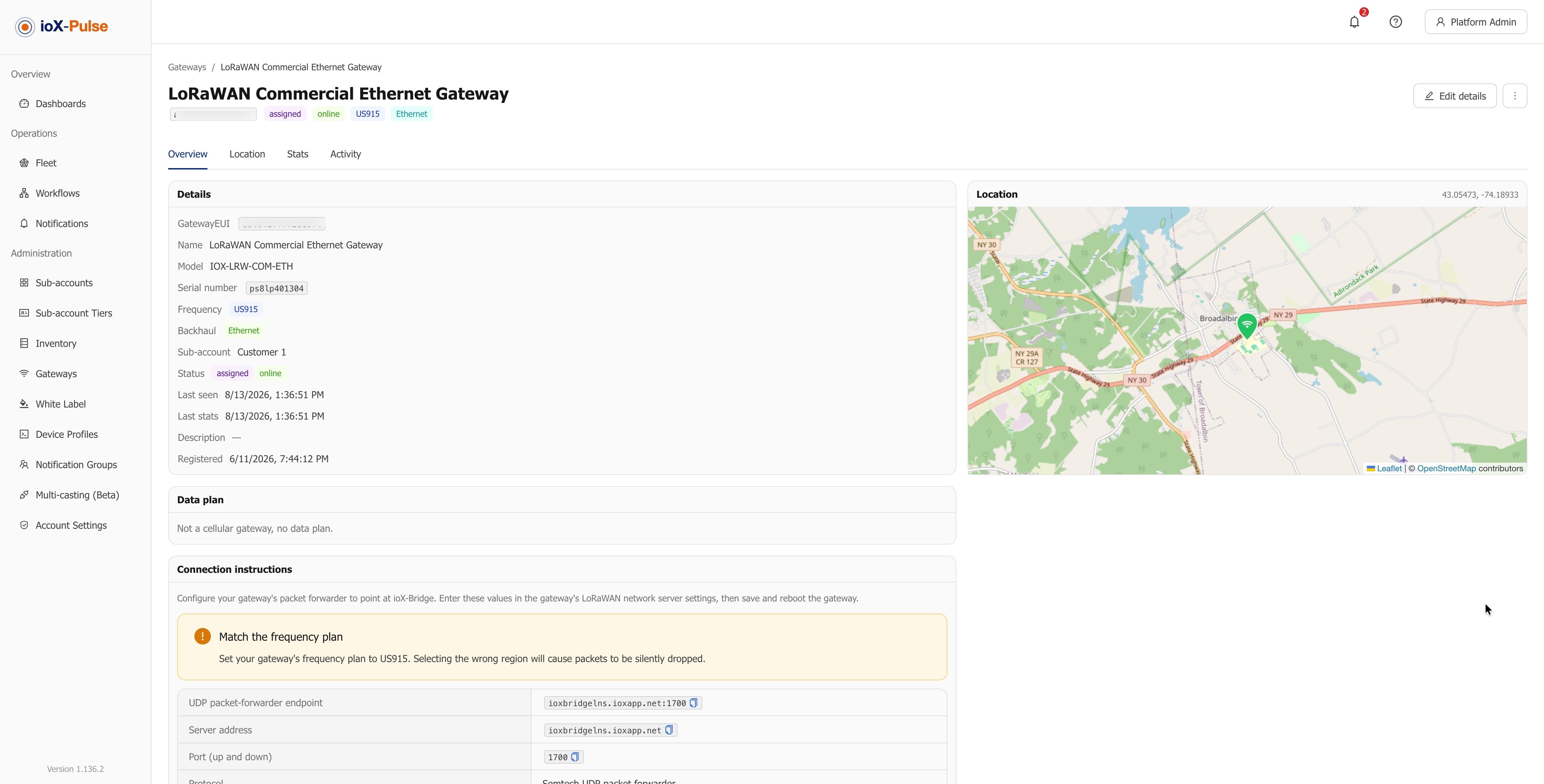
ioX-Pulse does not require you to buy a particular gateway or a particular sensor. Any standards-compliant LoRaWAN gateway connects by pointing its Semtech UDP packet forwarder at the network server, the same configuration step every LoRaWAN gateway supports. Sensors from major manufacturers are already in the device profile library with tested decoders, and if yours is missing you can write a decoder yourself or ask us to add it.
Five regional frequency plans are supported. And LoRaWAN is not the only way in: cellular NB-IoT and LTE-M devices register by IMEI, and Blues Notecard devices reach ioX-Pulse through your own Blues Notehub project.
- Any standards-compliant LoRaWAN gateway, over the Semtech UDP packet forwarder
- Sensors from any manufacturer, with a versioned profile library organized by manufacturer and model
- Cellular NB-IoT and LTE-M alongside LoRaWAN, registered by IMEI
- Blues Notecard devices through your own Blues Notehub project
- RSSI, SNR, and a 0–100% Signal Quality reading on every device, with no decoder configuration
For operators and for service providers
Built for Two Kinds of Team
ioX-Pulse gets used two ways. Either you run it for your own operation, or you run it for customers. The platform is the same either way. What changes is how many organizations you are keeping separate, and whose name is on the login screen.
Operations and Facility Teams
You run your own sensors across your own sites. ioX-Pulse gives you the dashboards your team checks each morning, the alerts that reach the right person out of hours, and a device list that tells you at a glance which units have gone quiet and which are running low on battery.
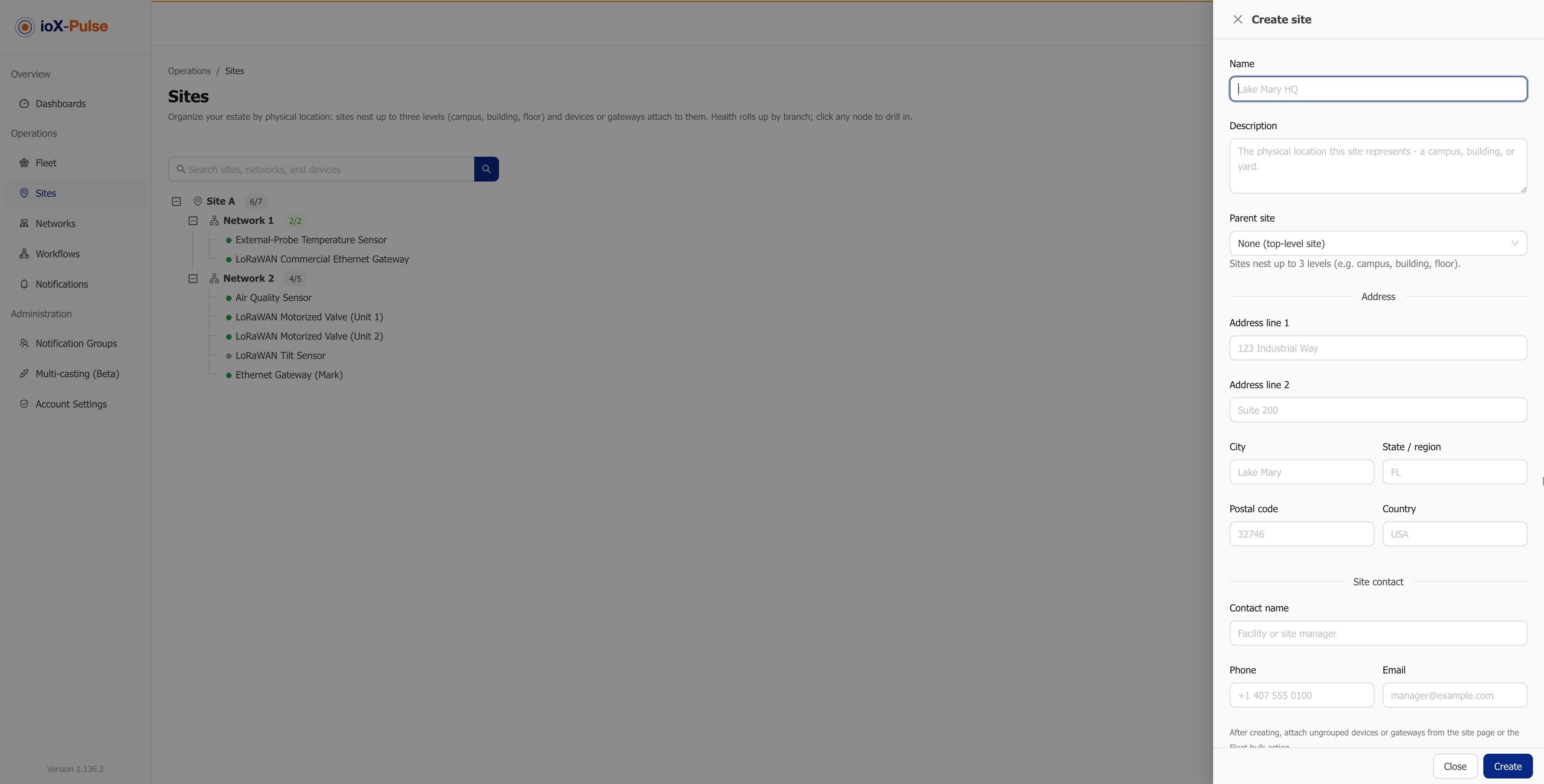
Organize equipment by site or by network, and give each person the access they need and nothing else.
Service Providers and Integrators
You deliver monitoring to customers. ioX-Pulse gives each customer a sub-account of their own, isolated from the rest, on a feature tier you define. Your brand and your domain, throughout.
Ship a device profile once and every customer using that sensor gets the same working dashboard. Author an alert rule at the product level and it applies across every fleet you manage.
Device, gateway, network server, platform
Where ioX-Pulse Sits in Your Stack
A LoRaWAN deployment has four layers, and it helps to know which one does what. Your sensors transmit over the air. Gateways receive those transmissions and forward them to the internet. A network server handles the radio side: authenticating devices, removing duplicates when several gateways hear the same message, and managing data rates. ioX-Pulse sits above all of that, and turns what arrives into something a person can use.
Layer 4 · the platform
ioX-Pulse
Decodes the payload into named readings, stores the history, draws the dashboards, evaluates the alert rules, and controls who sees what. This is the layer this page is about.
receives decoded readings from
Layer 3 · network server
ioX-Bridge
Authenticates devices, removes duplicates when several gateways hear the same message, and manages data rates. Most ioX-Pulse users never touch it directly.
connected over the internet to
Layer 2 · radio
Gateways
Receive radio transmissions and forward them on. Any standards-compliant LoRaWAN gateway connects over the Semtech UDP packet forwarder.
hears LoRaWAN uplinks from
Layer 1 · the field
Devices
Your sensors, meters, trackers, and actuators, from any manufacturer, across five regional frequency plans.
The network server underneath ioX-Pulse is ioX-Bridge, also part of the ioX-Connect suite. Most ioX-Pulse users never need to touch it directly.
Straightforward Plans, Published Prices
Four plans, priced by the number of devices you connect and how long your data is retained. Start a free trial without talking to anyone, and move up a plan when you need more devices; extra capacity is available immediately.
Pulse-Lite
Pulse-Core
Pulse-Edge
Pulse-Pro
Common Questions About ioX-Pulse
Most questions about an IoT platform come down to the same few things: whether it works with the hardware you already have, who can see what, and how the data reaches the systems you already run. Those come up in nearly every evaluation, so they are answered directly below.
ioX-Pulse is an IoT device management platform for LoRaWAN networks. It decodes sensor payloads into named readings and presents them as live dashboards, alerts, and reports. Service providers also run it as a multi-tenant workspace, with a separate sub-account for each customer under their own brand.
Yes. Any standards-compliant LoRaWAN gateway connects over the Semtech UDP packet forwarder, and sensors from major manufacturers are already in the device profile library with tested decoders. If your device is not there, you can write a decoder yourself or ask us to add one.
A network server handles the radio side: authenticating devices, removing duplicate messages, and managing data rates. It hands you a payload. ioX-Pulse starts there: it decodes the payload into readings, stores the history, draws the dashboards, evaluates the alert rules, and controls who sees what. Most deployments need both. The network server underneath ioX-Pulse is ioX-Bridge.
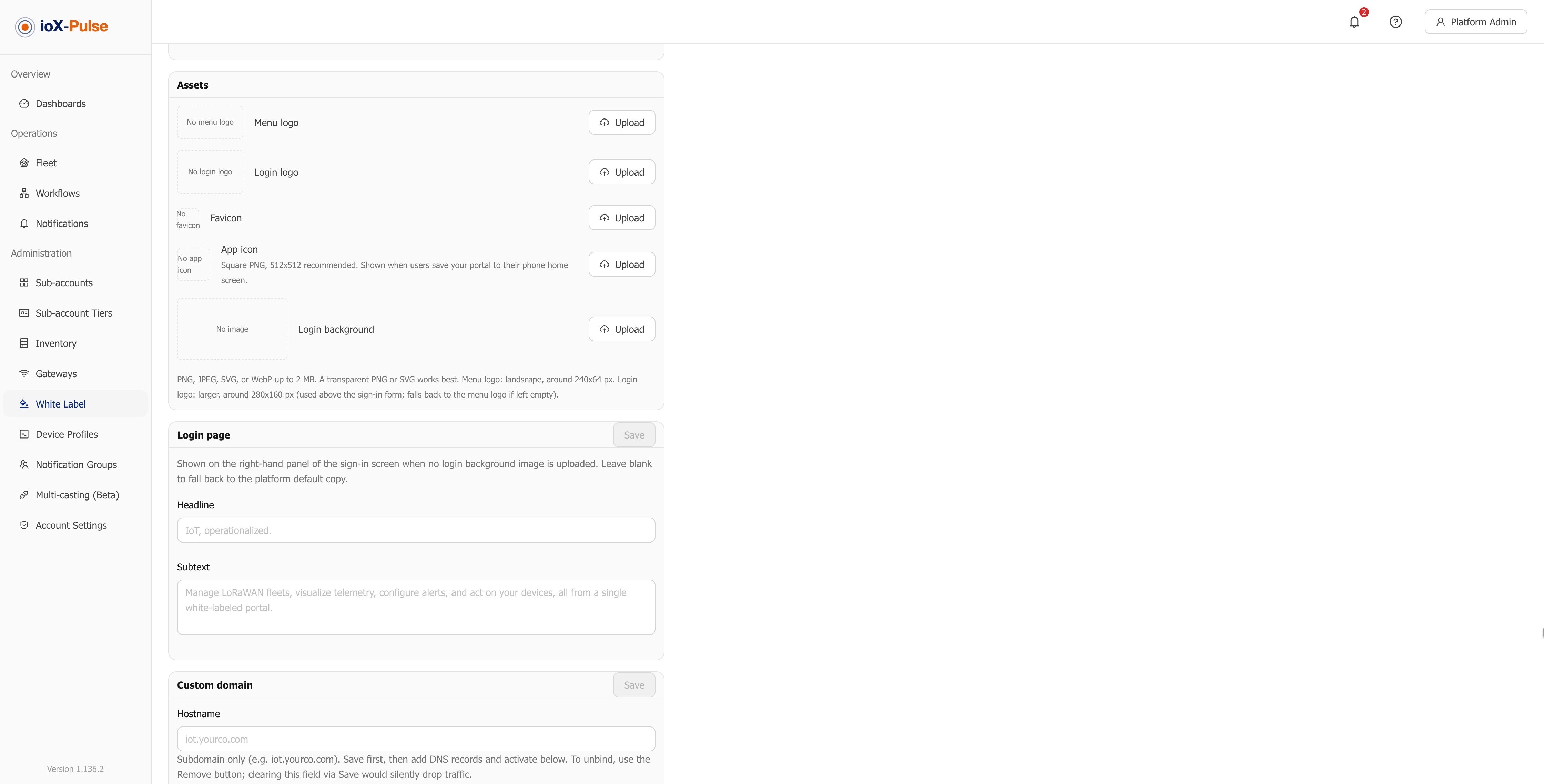
Yes. You set the app name, menu and login logos, favicon, home-screen icon, and brand colors, and you can point your own domain at the workspace so customers never see another company's name. Sub-accounts inherit your branding, so every customer sees one consistent product.
Through a device profile. The profile holds a JavaScript decoder that converts the raw bytes into named fields, along with the field definitions and display defaults. You can start from the manufacturer library, clone an existing profile, or write a decoder from scratch and test it against a real payload before saving.
Two ways. The REST API under /api/v1 lets your application read history and send commands, with a live interactive reference and an OpenAPI document. Webhooks push five event types (new readings, devices going online or offline, and alarms triggering or clearing) to your endpoint as they happen, signed so you can verify they came from us.
It is marked offline once it has been silent past its threshold, 30 minutes by default and adjustable per device. A workflow can email or text you when that happens. Its status also shows on the device list and on any dashboard widget bound to it.
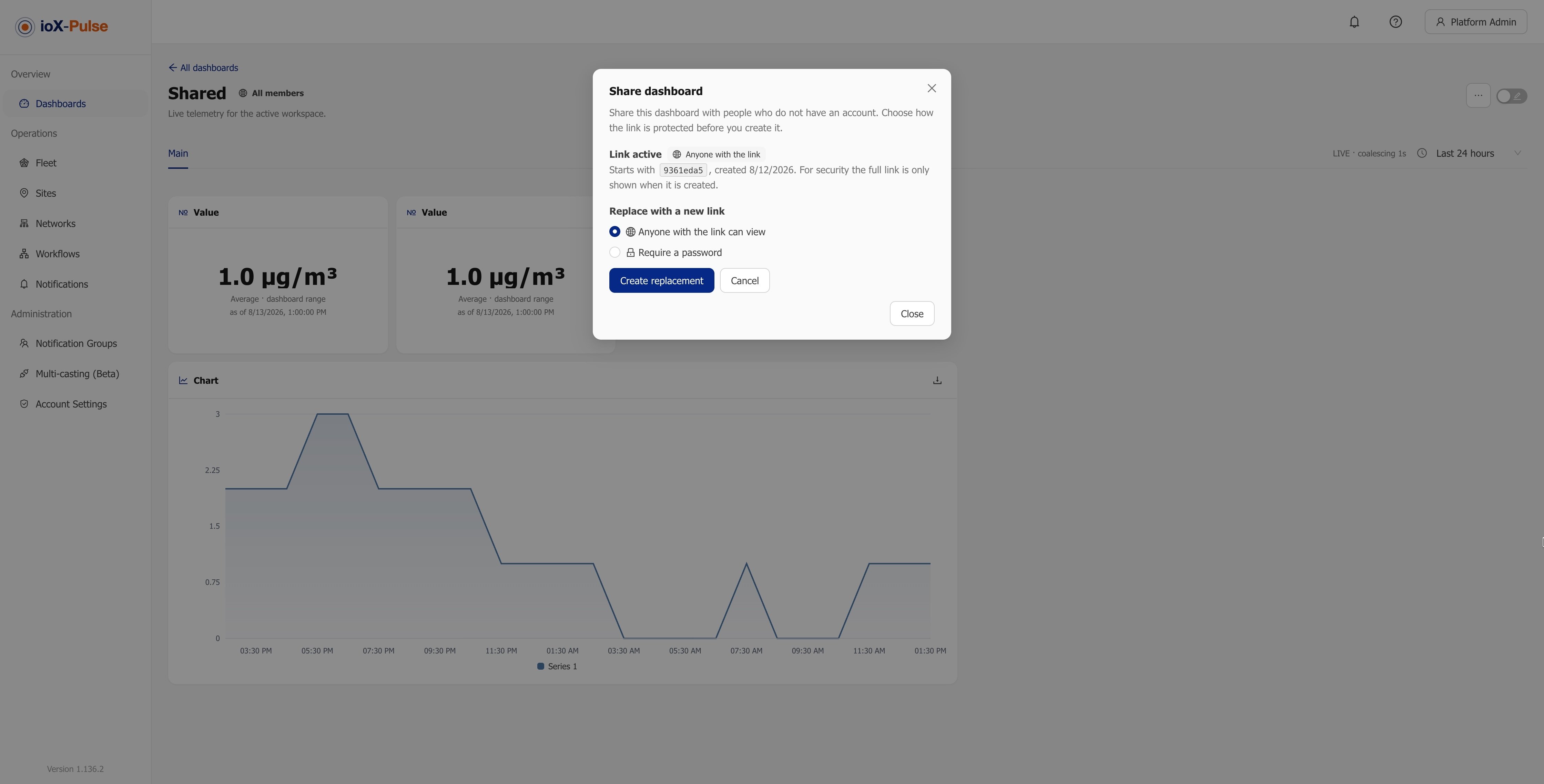
Yes. A dashboard can be shared as a link that opens in any browser with no sign-in, useful for a screen on a factory floor, or a customer who just wants to watch their own site. Links can be left open or protected with a password, are read-only by default, and can be revoked at any time.
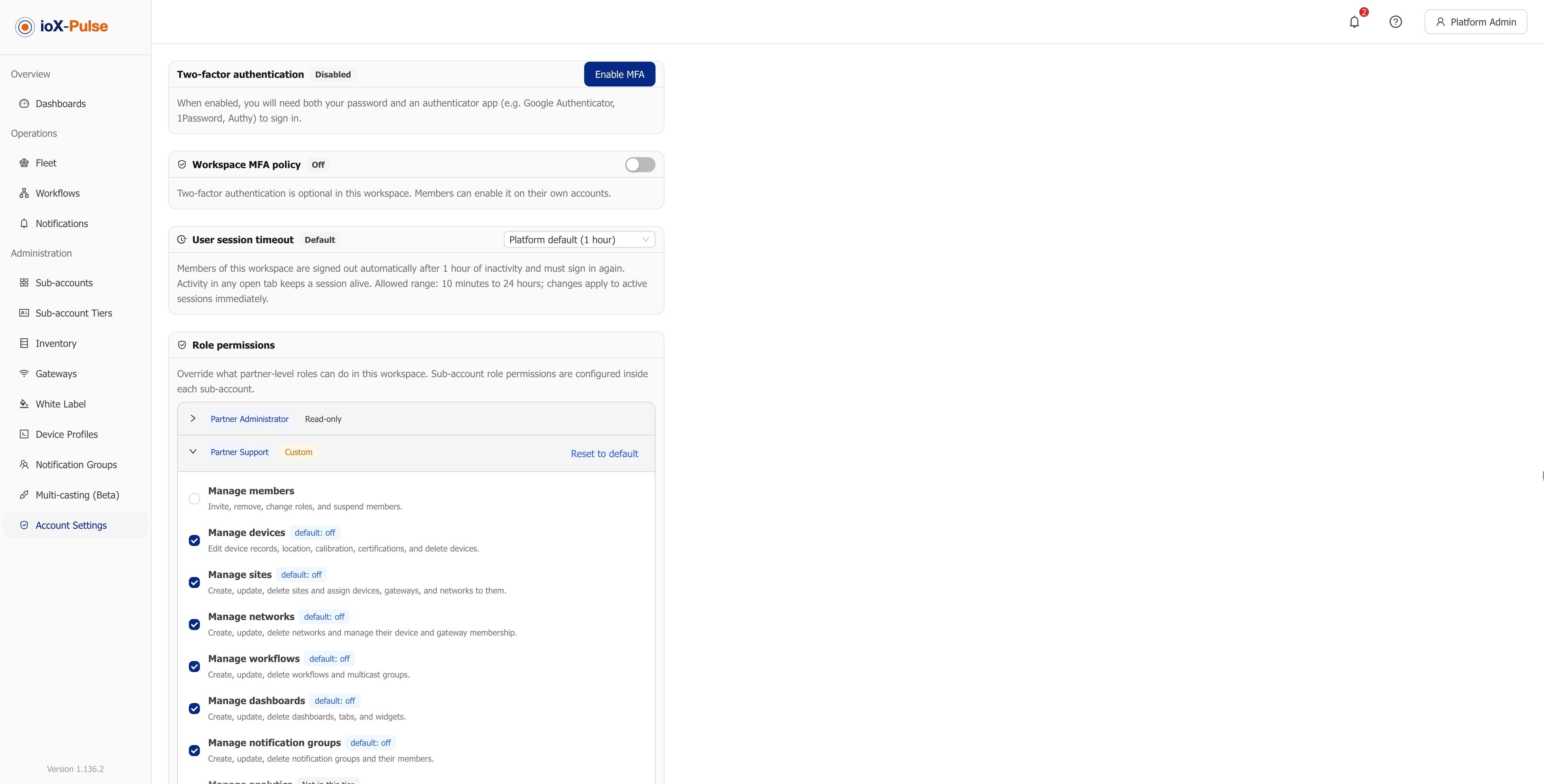
Yes. Roles carry both visibility and permission settings, and both can be overridden, so a login that sees only Dashboards and can change nothing is a configuration rather than a special build. Access to an individual dashboard can also be limited to named people or to members of a particular site.
Yes. You can pick a plan and start a trial without a sales conversation. Your card is collected up front but not charged until the trial ends, and you can cancel before then.
Ready to See ioX-Pulse?
Start a free trial and connect your first device, or talk to a specialist about running ioX-Pulse for your customers.
Contact Us
Our customer service representative helps you to understand what we offer for your business goals.