Catch heat, water and power problems before they reach the racks

IoT Solutions for Data Centers: Environmental and Power Monitoring

Battery-powered LoRaWAN sensors, one indoor gateway, alerts and history in ioX-Pulse
Data center IoT monitoring with LoRaWAN sensors and ioX-Pulse
Catch heat, water and power problems before they reach the racks

Data Center IoT Monitoring with LoRaWAN Sensors and ioX-Pulse

A data center fails quietly first: a CRAC (computer room air conditioning) unit drifts, a cold aisle creeps past its limit, a condensate line drips under the raised floor, a branch circuit runs closer to its breaker than anyone noticed. ioX-Connect LoRaWAN sensors put a reading on each of those points and report over your own private LoRaWAN network, so the gaps between your building management system, your PDUs and your rounds are covered without pulling cable.

Readings land in ioX-Pulse, where you set limits per rack, row or room, get an email, SMS or in-app alert the moment a reading crosses one, and keep the history for the next audit. The sensors are battery powered and run through a gateway you own, so a server room, an edge closet or a colocation cage can be instrumented in an afternoon.

Where downtime starts, and what to measure

What You Monitor in a Data Center, and Why It Pays

Most data center incidents are not sudden. They show up first as a temperature that drifts for days, a drip nobody sees, or a circuit that runs hot every afternoon. The three measurements below catch those early, and each one pays for itself in a different way.

Thermal headroom per rack

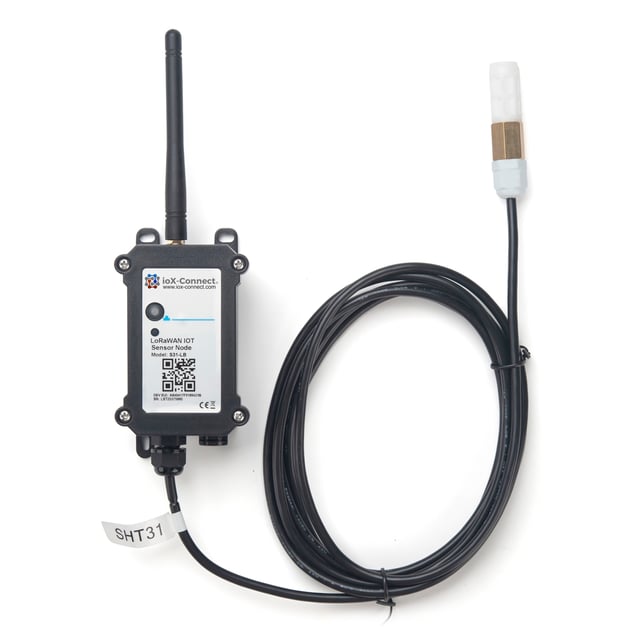
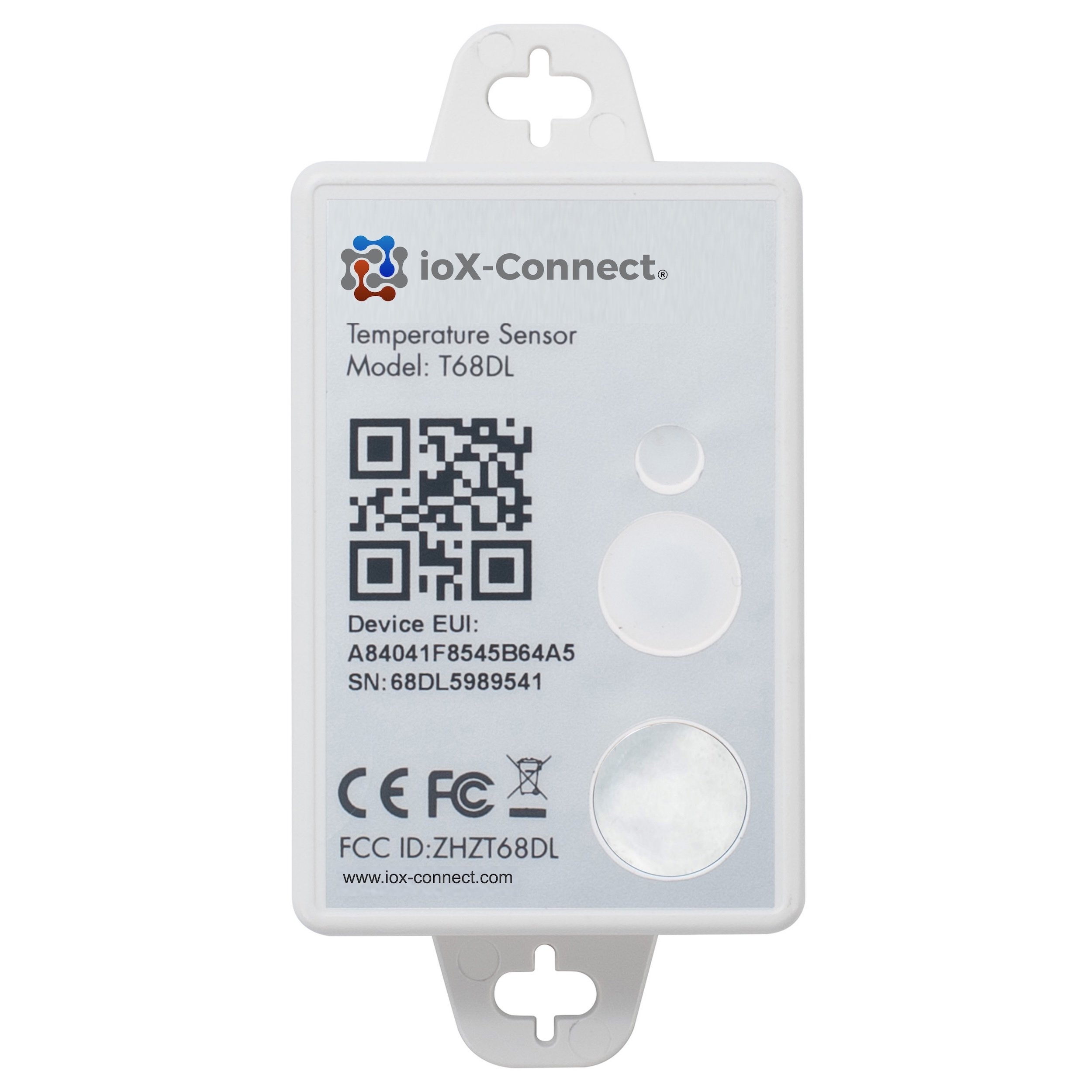
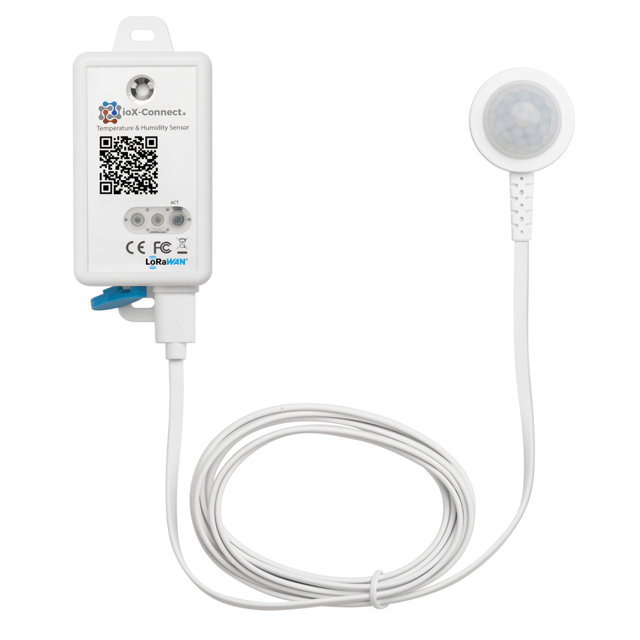
ASHRAE TC 9.9 recommends a server inlet envelope of 18 to 27 °C (64.4 to 80.6 °F). A sensor at the inlet of each row, rather than a thermostat on the wall, tells you how much of that envelope you actually use, so you can raise cooling set points with evidence and spend less on cooling.

Water where it must never be

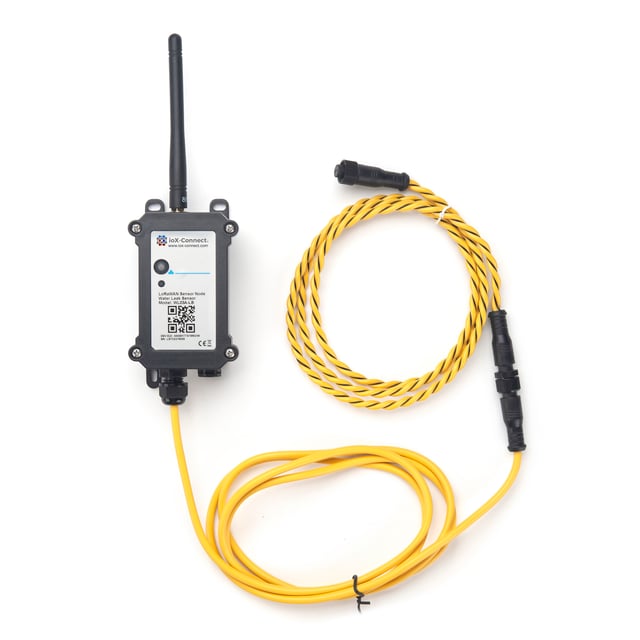
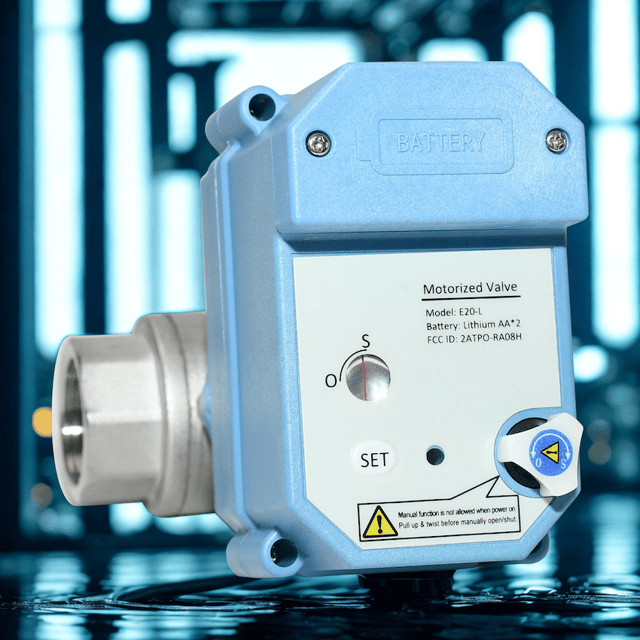
Condensate lines, chilled water loops and the floor void around CRAC units are where leaks start. A puck under each unit and a rope sensor along each pipe run report the first drops, and a motorized valve can close the supply before a cage floods.

Power you can see per circuit

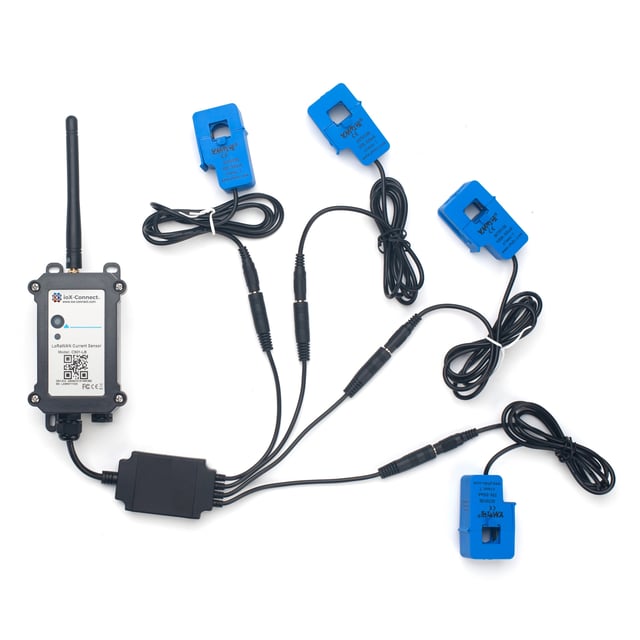
Clamp-on current meters on PDU feeds and branch circuits show load per circuit and per rack. They feed utility pulse counts into PUE (power usage effectiveness) tracking and warn when a circuit creeps toward its breaker rating.

LoRaWAN sensors that fit a server room, a data hall or a colocation cage

LoRaWAN Sensors for Data Center Monitoring

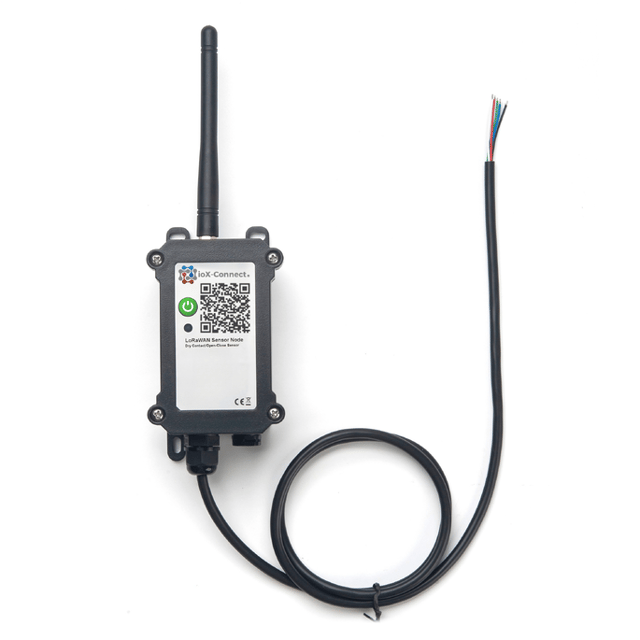
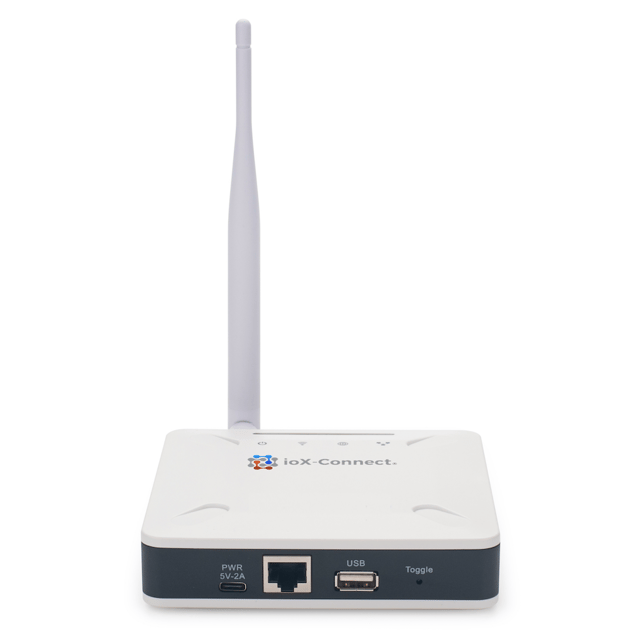
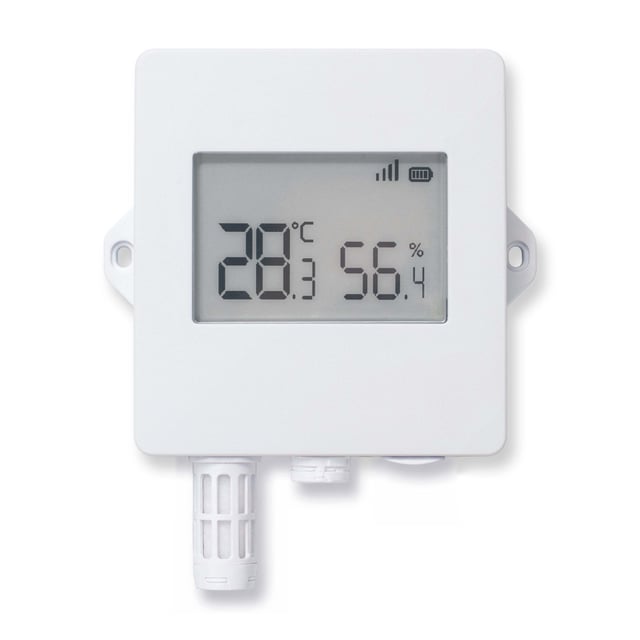
Every device below runs on a private LoRaWAN network through one indoor gateway, is battery powered unless noted, and reports to ioX-Pulse. Pick the sensors that match your rooms; a specialist can confirm placement and gateway count from a floor plan. Need differential air pressure, duct temperature or air velocity? Those are in the ioX-Connect RF sensor range.

Our Customers

Trusted by customers across multiple industries

Tomra Full logo
ProFrac Logo
FTSI-logo
Consulmet logo
pacific_northwest_national_laboratory
Axium Logo
Urban Property Management_Logo
NetLink-logo-final
Cosway
USWS_BIG
Filtrine
Colt Energy
Northern Michigan University_Logo
WLS Lighting Logo
FAQs

Frequently Asked Questions about Data Center IoT Monitoring

Evaluations of data center monitoring come down to a few practical questions: whether the radio reaches through the building, how alerts get to the on-call engineer, whether the history will stand up in an audit, and how the data gets into the tools you already run. Those are answered below.

LoRaWAN is designed for long range at low data rates and passes through walls, raised floors and rows of racks better than short-range radios such as Wi-Fi or Bluetooth. One indoor gateway typically covers a server room and the floors around it; a large hall or a heavily shielded basement may need a second. The free LoRaWAN Virtual Site Survey Tool gives you an estimated coverage map for your address before you buy.

A LoRaWAN gateway handles hundreds of sensors. The practical limit is set by how often each sensor reports, not by the device count, so a mixed deployment of temperature, leak and current sensors on one gateway is normal.

No. The sensors are battery powered and talk to the gateway over LoRaWAN. Only the gateway needs power and an Ethernet or cellular connection, and it can sit outside your production network if you prefer.

ioX-Pulse workflows send email, SMS and in-app alerts when a reading crosses the limit you set, with recovery notices when it returns to range and throttling so one event does not become fifty messages. A default workflow also alerts you when a gateway goes silent.

Yes. The Environmental Compliance dashboard in ioX-Pulse (Beta) records time in range against the temperature and humidity limits you set per site or sensor, keeps an excursion ledger with acknowledgements, and produces a PDF report. It reports what happened; it does not by itself make a site compliant with any standard.

Yes. ioX-Pulse has a documented REST API and signed webhooks, so readings and alerts can flow into your DCIM (data center infrastructure management), BMS (building management system) or ticketing tools.

Standard LoRaWAN devices from other manufacturers can join through the ioX-Pulse device profile library, and readings from other systems can be brought in on Pulse Pro, which includes external sensor integration.

LoRaWAN encrypts every message end to end with AES-128 keys unique to each device, and ioX-Pulse adds role-based access, multi-factor authentication and an audit log on top.

Have more questions about

Our Products and Services

We're here to help. Reach out and an IoT specialist will get back to you.

Contact Us

Our customer service representative helps you to understand what we offer for your business goals.