


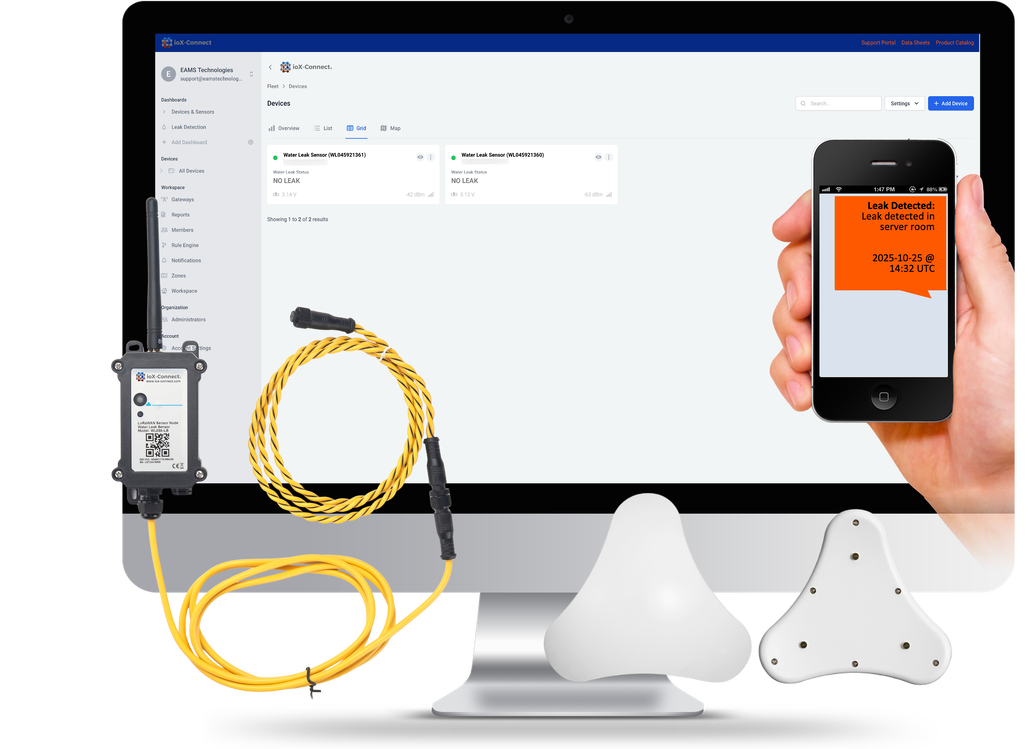
A single undetected water leak can cause thousands of dollars in damage before anyone notices. In data centers, commercial buildings, and industrial facilities, the consequences go beyond repair costs: equipment failure, business interruption, and compliance violations can compound rapidly. The challenge is that leaks often start in places no one checks regularly, under raised floors, behind walls, and along pipe runs.
LoRaWAN water leak detection sensors solve this problem by providing real-time monitoring across your entire facility with minimal infrastructure. In this guide, we cover how water sensing rope technology works, where to deploy it, and what to look for when choosing a system.
What Is a Water Sensing Rope Leak Detector?
A water sensing rope is a cable designed to detect moisture along its entire length. When water contacts any point on the rope, the sensor triggers an alert immediately, you don't need to guess where a leak might occur. Combined with LoRaWAN wireless connectivity, this means your facilities team receives notifications on their phone or monitoring dashboard the moment water is detected, even from sensors installed in remote or hard-to-reach locations.
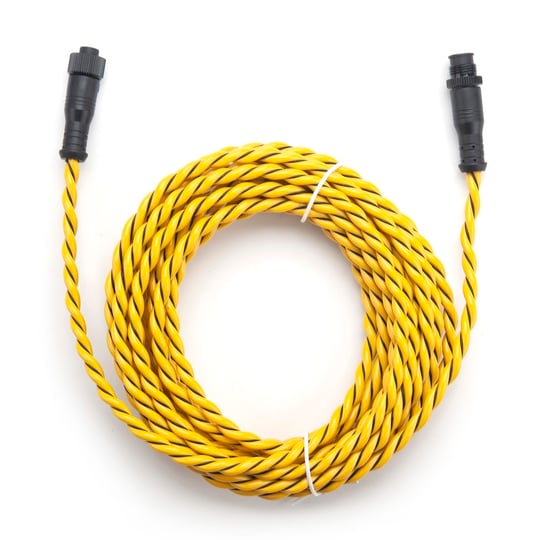
Unlike point sensors that only detect water at a single spot, rope sensors can cover 3 to 50 meters per unit. You run the rope along pipe routes, under HVAC units, around water heaters, and beneath raised floors, covering the full perimeter of your risk zone.
How LoRaWAN Water Leak Detection Works
1. Install the sensor: Run the water sensing rope along areas prone to leaks. The rope connects to a compact LoRaWAN transmitter that mounts nearby.
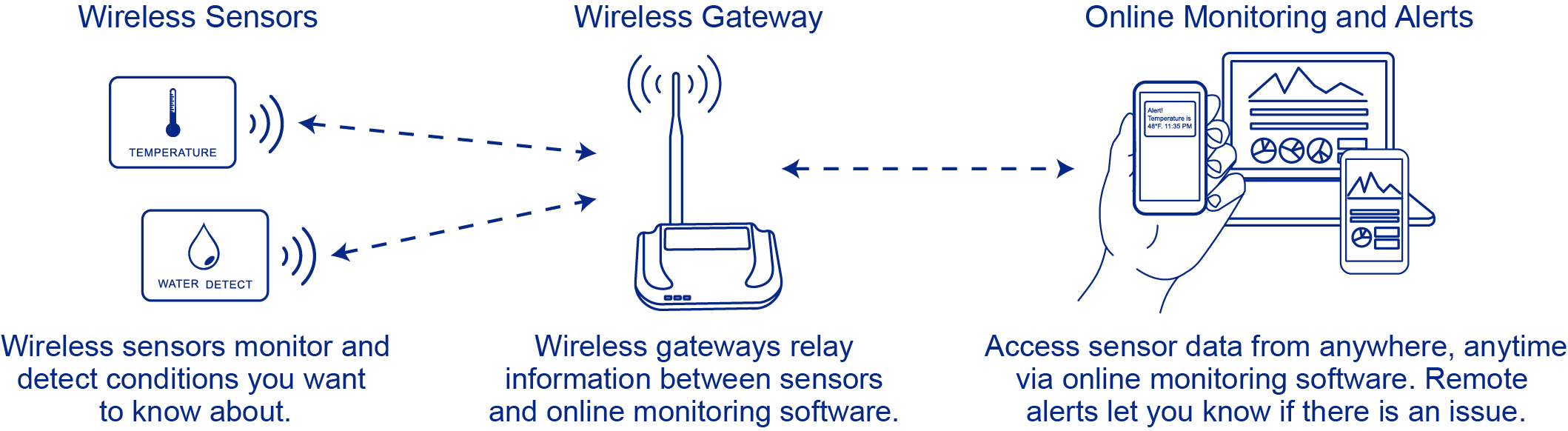
2. Connect to your network: The transmitter communicates wirelessly with a LoRaWAN gateway at 915 MHz (US ISM band). A single gateway covers up to 10 km outdoors or multiple floors indoors.
3. Configure alerts: Set up real-time notifications through the ioX-Connect platform. Choose email, SMS, or push notifications based on your team's workflow.
4. Monitor and respond: When the rope detects moisture, the platform delivers an alert with the sensor location within seconds. Your team can respond before a small drip becomes a major incident.
Why LoRaWAN for Water Leak Detection?
Facilities teams often ask why LoRaWAN instead of Wi-Fi or cellular for leak detection. The answer comes down to three factors that matter most in water monitoring deployments:
|
Factor |
LoRaWAN |
Wi-Fi |
Cellular |
|
Battery Life |
5–10 years |
6–12 months |
1–3 years |
|
Range |
Up to 10 km |
30–50 m |
Carrier-dependent |
|
Monthly Data Cost |
$0 (existing network) |
$0 (existing network) |
$3–15/device |
|
Sensors per Gateway |
500–2,000+ |
10–50 |
N/A (per SIM) |
|
Penetration (basements) |
Excellent (sub-GHz) |
Poor (2.4/5 GHz) |
Variable |
For water leak detection specifically, battery life and range are decisive. You need sensors in basements, crawl spaces, and behind equipment, places where running power cables is impractical and Wi-Fi coverage is unreliable. LoRaWAN's sub-GHz frequency penetrates concrete and steel far better than higher-frequency alternatives.
Pro Tip: Start your leak detection deployment with the highest-risk areas: server rooms, mechanical rooms, and areas with aging plumbing. A single water rope sensor covering one server room can prevent tens of thousands of dollars in equipment damage. Expand coverage from there based on your facility's risk assessment.
Where to Deploy Water Leak Sensors
- Data centers and server rooms: Run rope under raised floors and around CRAC units. Detect cooling system leaks before they reach equipment.
- Commercial HVAC systems: Monitor condensate drain pans and chilled water piping. Catch overflow before it damages ceilings and drywall.
- Manufacturing floors: Place sensors along process water lines and near chemical storage. Meet environmental compliance requirements with documented monitoring.
- Cold storage and food processing: Detect refrigerant or condensation leaks in freezer units. Protect inventory and maintain food safety compliance.
- Multi-tenant buildings: Monitor risers, common areas, and basement mechanicals. Reduce insurance claims and tenant disputes from water damage.
Why It Matters
According to insurance industry data, water damage is the second most common commercial property claim. Early detection reduces average claim costs by 60–80% because the response time drops from hours (or days) to minutes. LoRaWAN sensors make comprehensive coverage affordable, deploying hundreds of sensors across a facility can cost less than a single water damage remediation project.
Get Started with Water Leak Detection
ioX-Connect offers enterprise-grade LoRaWAN water leak detection sensors, including rope sensors, point sensors, and submersible level sensors. Every sensor connects to the ioX-Connect IoT platform for real-time alerts, historical trending, and integration with your existing building management systems.
Topics from this blog: lorawan water leak detection sensor water sensing rope rope leak detector lorawan water sensor